

Ser Jacopo Pipe
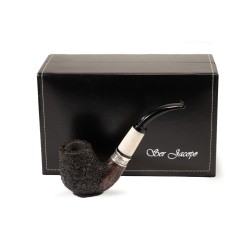
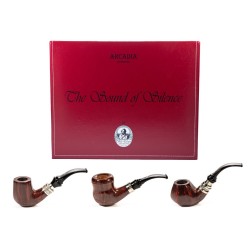
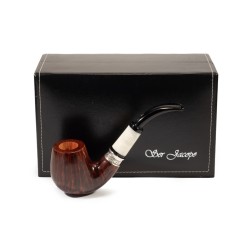
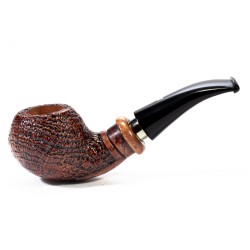
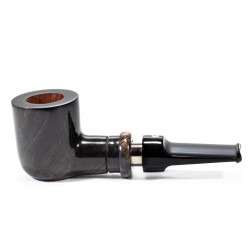
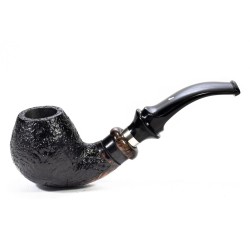
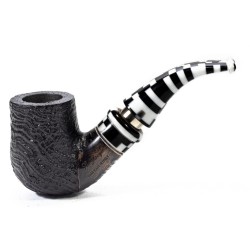
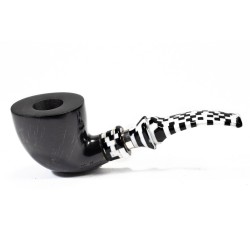
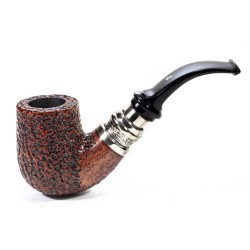
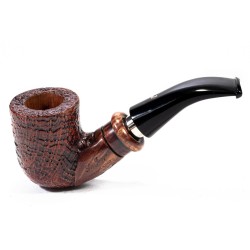
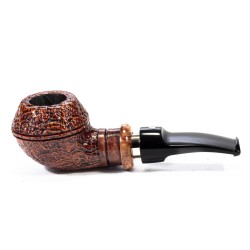

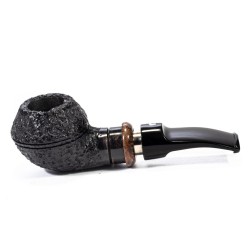
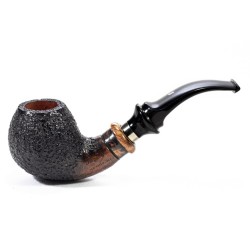
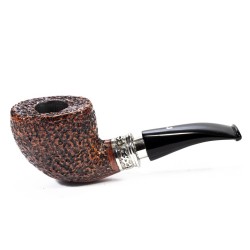
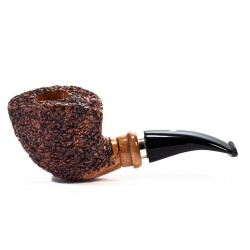
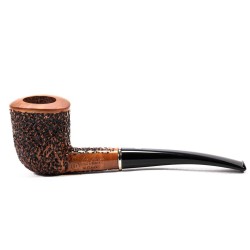
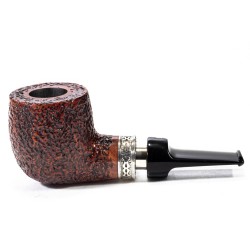
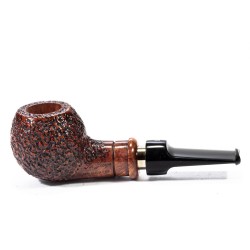
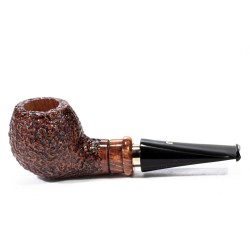
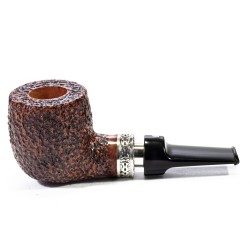
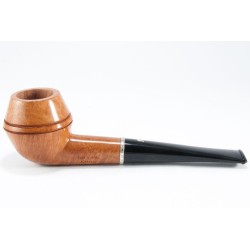
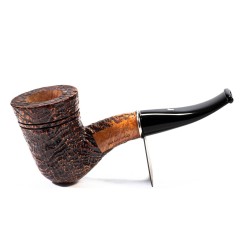
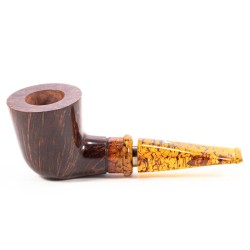
Ser Jacopo represents one of the highest expressions of Italian craftsmanship in the world of pipes. Born from the artistic vision of Giancarlo Guidi, the brand combines tradition, creativity, and meticulous material research into unique, recognizable creations deeply connected to the renowned Pesaro School.
The History of Ser Jacopo Pipes
The name Ser Jacopo is inspired by a Renaissance nobleman, a certain Ser Jacopone, chosen as a reference by the founder Giancarlo Guidi. An aristocratic-sounding name that, from the very beginning, embodied the artistic and ambitious spirit of the project.
Guidi was a central figure in the Italian pipe-smoking scene. Among the first artisans in Italy to authentically merge pipe making and art, he brought an uncommon artistic sensitivity to manufacturing. It is no coincidence that he studied at the Ferruccio Mengaroni Art Institute, attending the Applied Arts program — a path that profoundly shaped his creative approach.
His training continued first in the Marche region and later in Varese, in Northern Italy, one of the most important centers for pipe production. There, he also set up a small personal workshop where he began experimenting and refining his technique. He had realized that pipe making was where he could fully express his creativity — the same creativity that accompanied him during his moments of relaxation.
Guidi’s great insight was to break away from the dominant trend of the time, characterized by standardized, often anonymous pipes tied to outdated patterns, while innovations coming from Denmark were viewed with skepticism. He chose a different path: to enhance briar, highlight its grain, and give each piece its own character and identity.
Together with other artisans from Pesaro, who were equally dissatisfied with the “flat” production of those years, he launched a new project focused on high-quality artisanal manufacturing. Thus, in 1971, Mastro de Paja was born.
Within a few years, Guidi established himself as an internationally renowned pipe maker, inspiring what would later be known as the “Pesaro School,” training numerous artisans who would go on to start their own businesses, contributing to the growth and reputation of the district.
After ten years, however, differences in vision emerged among the partners of Mastro de Paja. Guidi decided to embark on a new path, starting again from scratch — but with one crucial difference: he was no longer a young craftsman at the beginning of his journey, but a recognized and respected master. In 1983, he founded Ser Jacopo dalla Gemma. His new creations quickly achieved great success, as they represented the evolution and refinement of the ideas developed in the previous years.
Struck by illness, Guidi passed away in August 2012. In the final years of his life, he worked with determination to ensure continuity and stability for the company beyond his passing.
Today, Ser Jacopo is led by Maurizio Fraternale, a long-time supplier and later partner of Guidi, who continues to carry forward the founder’s philosophy, crafting fine pipes rooted in a tradition of art, research, and strong identity.
The Craftsmanship and Materials of Ser Jacopo Pipes
Craftsmanship lies at the heart of Ser Jacopo pipes. Giancarlo Guidi combined manual workmanship with a solid artistic education, and this is reflected in every single piece: each pipe is entirely handmade, with no shortcuts.
These creations are often stylistically complex, requiring exceptional technical mastery and refined aesthetic sensitivity. It is precisely this combination of skill and artistic vision that sets the brand apart.
Great attention is also devoted to materials. Briar is the wood of choice, selected exclusively in Extra Extra quality. The blocks undergo specific aging and curing treatments developed to enhance the natural grain to the fullest, making each pipe truly unique.
Another distinctive feature of Ser Jacopo is the use of refined materials: gemstones, precious metals, horn, bone, and special woods are employed to create original and sophisticated mounts that are rarely found in other brands. These are not mere decorative details, but elements that define the pipe’s style and identity.
The Most Loved Ser Jacopo Series
Ser Jacopo is deeply connected to the historic series created by Giancarlo Guidi throughout his creative journey. These collections are not simple product lines, but true chapters of his artistic vision.
Among the earliest is the Renaissance, launched in 1984 for the American market, offering an elegant and personal reinterpretation of classic pipe shapes.
In 1996 came the Calabash, recognizable for its pronounced curve reminiscent of a goose neck — a shape so distinctive that it required a special drill to bore the shank.
That same year saw the birth of the Pipaccia, one of the most creative series, inspired by the pipes smoked by sailors in the port of Pesaro. Also introduced in 1996 was the Domina, which still today is released annually with a new, original shape.
The Compta, introduced in 1997, includes the shapes that Guidi considered the most difficult to produce: classical in appearance, yet extremely complex in execution.
Among the most renowned series is the Picta, inspired by the works of great artists such as Pablo Picasso, Vincent Van Gogh, René Magritte, and Joan Miró — a direct encounter between pipe making and figurative art.
The Ser Jacopo Modica line includes the brand’s more accessible models.
The Calumet series consists of four models produced in very limited numbers and recalls the traditional peace calumets of Native Americans.
The Millennium was produced only once, in the year 2000. As stated by the brand, to see a similar masterpiece again one would have to wait another thousand years.
The Iucunda stands out for its exclusive treatment with a secret oil-based formula, designed to deliver a particularly smooth and sweet smoke.
The Delecta, Pulchra, Flatus, Imago, Melolontha, and Cymatium series identify different types of mounts, each with its own character and specific craftsmanship.
The Leonardo da Vinci series focuses on delivering a cool smoke, while the Albus et Niger series plays on the contrast between a dark bowl and a white methacrylate stem with a double sterling silver mount.
The Historica series offers modern reinterpretations of Giancarlo Guidi’s iconic shapes, preserving their original spirit.
Finally, the Gem series, produced in limited quantities, represents one of the brand’s highest achievements: top-grade briar combined with a precious gemstone set into the stem and enclosed in an 18-karat gold band. A detail that is not merely aesthetic, but a statement of prestige.
Why Choose a Ser Jacopo Pipe
Choosing a Ser Jacopo pipe means choosing a precise vision of what a pipe should be — the one born from the mind of Giancarlo Guidi and the Pesaro School.
It means carrying a pipe that is not shaped by a mold, but by an idea. A pipe in which Extra Extra briar is selected to be enhanced, not merely worked. A pipe where shape and grain interact, because it is the briar itself that suggests the final form.
It also means choosing a recognizable aesthetic: bold mounts, refined materials such as gemstones and precious metals, details that other brands rarely dare to propose. The historic series — from Delecta to Historica — are not simple collections, but milestones in a precise artistic journey.
A Ser Jacopo is not designed for those looking for just any pipe.
It is for those who want character, personality, and a clearly identifiable signature.
If you are looking for a pipe that truly stands out, with a strong heritage and a clear identity, then it is time to choose your Ser Jacopo.
Frequently Asked Questions (FAQ)
How are Ser Jacopo pipes classified?
Ser Jacopo pipes are primarily distinguished by their finish: smooth, rusticated, or sandblasted. For this reason, they are identified with a letter — L, R, or S — indicating the type of surface workmanship.
Alongside this classification, there are specific series that highlight particular characteristics. For example, the Rowlette is hand-carved; the Spongia features a natural-style finish; and the Historica offers modern reinterpretations of Giancarlo Guidi’s classic shapes.
Further below, you will find the complete classification table of Ser Jacopo pipes along with their respective price ranges.
Are Ser Jacopo pipes handmade?
Yes. Ser Jacopo pipes are entirely handmade in Pesaro. Each pipe is the result of a long and complex artisanal process, carried out according to the philosophy and principles introduced by Giancarlo Guidi, which still form the foundation of the brand today.
Are Ser Jacopo pipes high quality?
Ser Jacopo is synonymous with high quality. The pipes are crafted using Extra Extra briar and undergo meticulous artisanal processes that enhance both shape and grain.
Their workmanship is unmistakable, as are the distinctive engravings, including the famous Latin motto “Per aspera ad astra.” It is a reminder of the effort required to transform a simple briar block into a pipe of excellence and, at the same time, a symbol of the achievement reached by those who choose to own one.
What are the opinions on Ser Jacopo pipes?
Ser Jacopo pipes are designed for those who seek, first and foremost, a handcrafted work rather than a standard object. The shapes, mounts, and engravings stand out for a style that breaks conventions — immediately recognizable and difficult to replicate.
In terms of smoking performance, these are premium pipes. The quality of the briar, the precision of the craftsmanship, and the expertise of artisans trained in the Pesaro School tradition ensure performance that fully matches their positioning.
In short, they are pipes for those who want personality, character, and strong artistic content — without compromising on technical quality.
Pipe Ser Jacopo: Video
The prices of Ser Jacopo pipes
| Code | Description | Price (€) |
|---|---|---|
| R1 | Rusticated various colors | 200 |
| S1 | Sandblasted black color | 210 |
| S2 | Sandblasted brown color | 230 |
| R2 S3 SPONGIA | Natural rusticated and sandblasted | 250 |
| ROWLETTE | Carved by hand | 290 |
| FUMA | Smooth light brown | 250 |
| LR | Smooth red | 250 |
| L NIGER | Smooth black | 270 |
| L1 | Smooth black | 320 |
| L2 | Smooth clear | 430 |
| UNIGENA | Sandblasted and smooth original pipes | from 300 |
| SMERALDO | Flamed various colors | 600 |
| GRANATO | Flamed various colors | 750 |
| ZAFFIRO | Flamed natural color | 900 |
| RUBINO | Flamed natural color | 1100 |
| BRILLANTE | Flamed natural color | from 2200 |
Surcharges
| Category | Examples | Price (€) |
|---|---|---|
| A | Silver true - Maxima - Calabash - Jucunda - Churchwarden | 50 |
| B | Imago - Melolontha - Opus - Delecta and Pulchra | 100 |
| C | Picta - Pipaccia - Delecta and Silver Pulchra - Amber and horn | 140 |
| D | Domina - Calumet - Insanus - Mangiafuoco | 180 |
| E | Leonardo - 5 Maxima | 220 |
| EE | + 5 Maxima | from 260 |
Historica
| Code | Description | Price (€) |
|---|---|---|
| R1 | Rusticated various colors | 420 |
| S1 S2 | Sandblasted black and brown | 450 |
| R2 S3 SPONGIA | Natural rusticated and sandblaxted | 480 |
| ROWLETTE | Carved by hand | 530 |
| L NIGER | Smooth black | 510 |
| L1 | Smooth brown | 560 |
| L2 | Smooth clear | 680 |
| SMERALDO | Flamed various colors | 900 |
| GRANATO | Flamed various colors | 1050 |
| ZAFFIRO | Flamed natural color | 1200 |
| RUBINO | Flamed natural color | 1400 |