

Castello Pipe
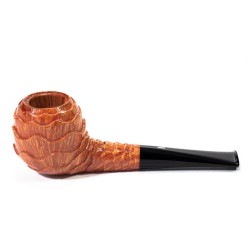
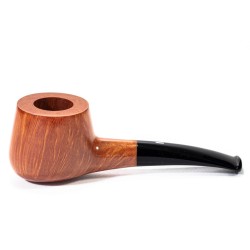
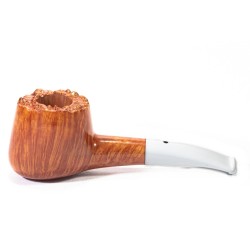
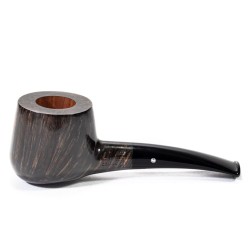
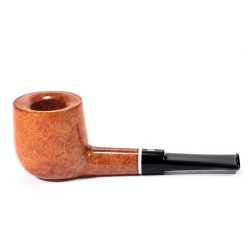
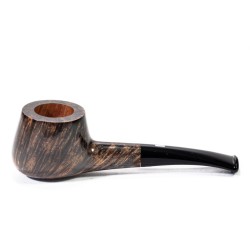
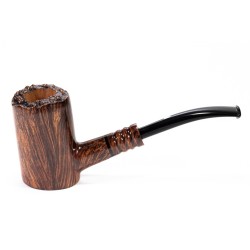
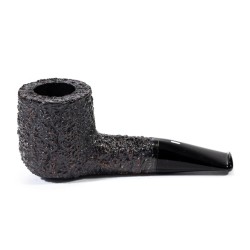
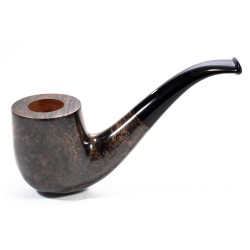
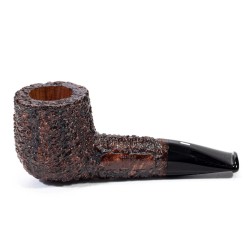
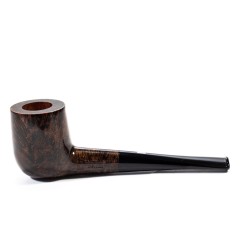
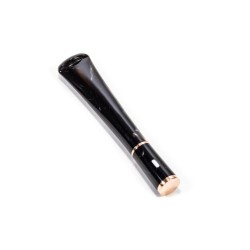
Castello pipes have been regarded for over seventy years as some of the most desirable handmade pipes in the world. From the very beginning, Castello was among the first brands to conceive the pipe not merely as a smoking instrument, but as a luxury object—one of design and strong personal identity.
The brand’s history is inseparably linked to the vision of Carlo Scotti, the legendary Ticinese tobacconist who knew how to combine smoking quality, aesthetic research, and prestige. The name Castello was chosen for its evocative strength and its immediate recognizability across Europe: whether read in Italian, French, or German, it consistently evokes imagery of prestige, solidity, and authority.
Castello’s production philosophy—deeply artisanal and deliberately limited in numbers—has made these pipes increasingly sought after over time, enhancing both their collectible value and their prestige on the market.
The legendary history of Castello pipes
The Castello brand was founded in 1947 in Cantù, at a time when Italian pipes were largely seen as simple functional objects. Carlo Scotti was among the first to envision a pipe capable of expressing status, elegance, and character, breaking away from the serial production typical of that era.
The early years were challenging, and after about six years the company was close to shutting down. However, the encounter with American importer Wally Frank proved decisive. Captivated by Castello pipes, he began distributing them in the United States, opening the doors to the international market.
From this collaboration came the famous Castello Diamond Point pipes, recognizable by the small diamond set into the mouthpiece in place of the classic white bar. Initially met with skepticism by American smokers, Castello pipes soon stood out because they were made entirely by hand by a single artisan—an approach that was revolutionary at the time.
This choice, rooted in craftsmanship and uniqueness, marked a new era for pipe making and led Castello to establish itself in Italy as well, especially during the 1960s and 1970s, when demand far exceeded production capacity.
Over time, Castello became a brand appreciated by prominent figures such as Sandro Pertini and Enzo Bearzot, often depicted smoking a Castello pipe—further testimony to the prestige the brand had achieved.
In the 1980s, company leadership passed to Franco “Kino” Coppo, Carlo Scotti’s son-in-law, who introduced significant innovations in grading and stamping systems, reaching a production level of around 8,000 pipes per year. Since 2025, management has been entrusted to Stephanie Coppo, who continues to preserve and pass on the founder’s legacy.
The importance of grading in Castello pipes
One of the defining features of Castello pipes is the grading system introduced by Franco Coppo, identified by the letter “K”.
In smooth pipes, a higher number of Ks indicates superior briar grain quality, while in rusticated and sandblasted pipes the grade is linked to the size of the bowl.
Alongside grading, the stamps identify the pipe’s finish: Sea Rock for rusticated pipes, Old Antiquari for sandblasted ones, while among smooth pipes historic markings such as Castello "Castello" and Castello Collection stand out.
The iconic finishes of Castello pipes
Castello finishes are an integral part of the brand’s identity and follow a precise nomenclature stamped directly on the pipe. Among the most historic finishes are Sea Rock, Old Antiquari, Natural Vergin, Trade Mark, "Castello", and Collection.
Over time, finishes of exceptional prestige have also been introduced, such as Fiammata, Occhio di Pernice (Bird’s Eye), and Greatline. These are reserved for pipes with extraordinary grain and are produced in very small numbers each year, making them among the most coveted by collectors.
Choose a Castello pipe from the wide Pipeonline catalog
Discover a wide selection of Castello pipes on Pipeonline and find the model best suited to your next smokes.
Castello has always represented a status symbol in the world of slow smoking and one of the highest expressions of Italian craftsmanship.
Owning a Castello means entering a universe defined by uniqueness and character: as Franco Coppo often reminded us, no two Castello pipes are ever identical, because every enthusiast deserves the certainty of owning a truly one-of-a-kind piece.
Frequently Asked Questions
Where can I buy an original Castello pipe?
It is possible to purchase an original Castello pipe through specialized tobacconists and authorized retailers such as Pipeonline.
At Pipeonline you can find a carefully selected range of new Castello pipes with fast shipping, including models chosen to satisfy both lovers of Italian artisan pipes and the most demanding collectors.
What are the main characteristics of Castello pipes?
Castello pipes stand out for three fundamental characteristics that have made the brand one of the most prestigious names in the world of artisan pipe making:
- Status: Castello is considered one of the most important pipe brands in the world and, for many enthusiasts, represents the quintessence of the Italian artisan pipe.
- Design: Castello pipes reinterpret classic shapes with a style that is immediately recognizable. Over the years, the brand has created shapes that became true icons among connoisseurs, now sought after and appreciated worldwide.
- Craftsmanship: Castello was one of the companies that helped introduce the modern concept of the artisan pipe. Every pipe is crafted individually, which is why it is virtually impossible to find two Castello pipes that are perfectly identical.
What are the most popular Castello pipe models available on the market?
Among the most iconic Castello models is the famous 55 Pot, considered by many enthusiasts one of the brand’s most representative shapes thanks to its robust proportions and instantly recognizable design.
Also highly appreciated is the 10 Brucianaso, a compact pipe featuring a generous bowl and strong visual character, as well as shape 33, a reinterpretation of the classic Canadian shape that has become one of the most beloved models among Castello enthusiasts.
What is the average price of high-quality Castello pipes?
High-quality Castello pipes generally have an average price of around €500, although the value can vary significantly depending on the series, grain quality, and rarity of the model.
The more accessible lines, such as Sea Rock and Natural Vergin, usually start at around €380, while prestigious Collection Great Line Fiammata pipes can exceed €2500, especially in the case of particularly exceptional grain patterns or highly sought-after limited editions.
Which Castello pipe models are most appreciated by experts?
Connoisseurs especially appreciate the most prestigious series in the Castello production, such as the Collection Great Line, which includes some of the most spectacular straight grain pipes produced by the historic Cantù-based company.
The Collection “Occhio di Pernice” pipes are also highly sought after thanks to their remarkable bird’s-eye grain patterns, a visual characteristic particularly admired by lovers of high-quality briar.
Among long-time enthusiasts of the brand, the Sea Rock series is also extremely popular and is considered by many one of the most iconic rusticated finishes in the history of Italian pipe making.
How do I choose the Castello pipe best suited to my needs?
To choose the Castello pipe best suited to your preferences, it is important to first consider the finish you are looking for.
Those searching for particularly striking and highly visible grain patterns should focus on smooth models, especially the Collection “Fiammata” and Collection “Great Line” series, famous for their exceptional straight grain.
Sea Rock pipes are instead an excellent choice for smokers who appreciate deep rusticated textures and a more rugged aesthetic, while Natural Vergin models highlight the natural color of the briar, allowing it to mature beautifully over time through use.
Shape is also an important factor: Castello is renowned for its personal reinterpretations of classic pipe shapes, creating pipes with a strong and immediately recognizable identity.
How can I recognize an original Castello pipe from a counterfeit?
To recognize an authentic Castello pipe, it is essential to carefully examine the stampings located on the underside of the pipe.
Original pipes generally feature the “Castello” stamping, the name of the series — such as Sea Rock or Collection — and the “Made in Cantù Italy” marking.
Smooth pipes also display the K grading system, used to classify the quality of the grain, while on rusticated and sandblasted models the K grading refers to the pipe’s size. These markings are typically enclosed within a circle.
All Castello pipes also feature the famous “Kino” stamping. On more prestigious models, such as certain Castello Collection pipes, the signature of Carlo Scotti may also be present.
Finally, pipes intended for the Italian market also include the identification code of the authorized retailer: for Pipeonline, the code is “G5”, while pipes destined for the American market generally carry the “US” marking.
Castello Pipes: Videos
The prices of Castello pipes
| Series | Grade | Price (€) |
|---|---|---|
| CASTELLO COLLECTION "OCCHIO DI PERNICE" | ||
| Collection "Occhio di Pernice" | K | 520,00 |
| Collection "Occhio di Pernice" | KK | 600,00 |
| Collection "Occhio di Pernice" | KKK | 660,00 |
| Collection "Occhio di Pernice" | 4.4 | 1.200,00 |
| CASTELLO COLLECTION "FIAMMATA" | ||
| Collection "Fiammata" | K | 860,00 |
| Collection "Fiammata" | KK | 1.100,00 |
| Collection "Fiammata" | KKK | 1.300,00 |
| Collection "Fiammata" | KKKK | 1.700,00 |
| CASTELLO PEZZI "STORICI" SERIES | ||
| Collection "Great Line" | KK | 720,00 |
| Collection "Great Line" | KKK | 820,00 |
| Collection "Great Line" | KKKK | 920,00 |
| Collection "Great Line" Fiammata | K | 1.100,00 |
| Collection "Great Line" Fiammata | KK | 1.600,00 |
| Collection "Great Line" Fiammata | KKK | 2.000,00 |
| Collection "Great Line" Fiammata | KKKK | 2.500,00 |
| "Le Dune" | - | a partire da 650,00 |
| "Le Dune" Sea Rock | - | a partire da 550,00 |
| "Pezzo Unico" | - | a partire da 3.300,00 |
| "Flame" | - | a partire da 4.000,00 |
| "Velata" | - | a partire da 4.000,00 |
| CASTELLO "BIG-LINE" | ||
| Collection | - | a partire da 1.400,00 |
| Old Antiquari | - | a partire da 840,00 |
| Sea Rock | - | a partire da 780,00 |
| Classic Tamper | - | 140,00 |
| Sea Rock | KK | 380,00 |
| KKKK | 400,00 | |
| Giganti | 450,00 | |
| GG/GL | 490,00 | |
| GGG | 580,00 | |
| Natural Vergin | KK | 380,00 |
| KKKK | 400,00 | |
| Giganti | 450,00 | |
| GG/GL | 490,00 | |
| GGG | 580,00 | |
| Old Sea Rock | KK | 380,00 |
| KKKK | 400,00 | |
| Giganti | 450,00 | |
| GG/GL | 490,00 | |
| GGG | 580,00 | |
| For special TT-marked workmanship, a €50.00 surcharge applies. | ||
| Old Antiquari | KK | 400,00 |
| Old Antiquari | KKKK | 440,00 |
| Old Antiquari | Giganti | 480,00 |
| Old Antiquari | GG/GL | 560,00 |
| Old Antiquari | GGG | 640,00 |
| Trade Mark (mahogany, walnut, natural) | KK | 420,00 |
| Trade Mark (mahogany, walnut, natural) | KKKK | 460,00 |
| "Castello" | KK | 460,00 |
| "Castello" | KKKK | 520,00 |
| "Castello" | Giganti | 580,00 |
| "Castello" | GG/GL | 640,00 |
| Collection | K | 540,00 |
| Collection | KK | 600,00 |
| Collection | KKK | 640,00 |
| Collection | KKKK | 700,00 |
| "Aristocratica" | Aristocratica | 620,00 |
| "Aristocratica" | GG/GL | 800,00 |
| "Aristocratica" | Fiammata | 940,00 |
| "Aristocratica" | GL Fiammata | 1.350,00 |
| "Perla Nera" | K | 540,00 |
| "Perla Nera" | KK | 560,00 |
| Price list updated as of 01.01.2026 | ||