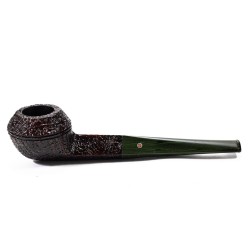
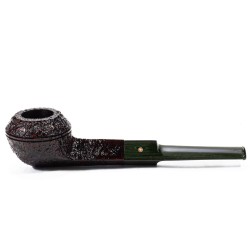
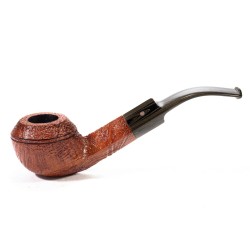
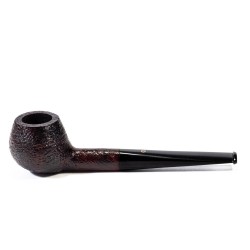
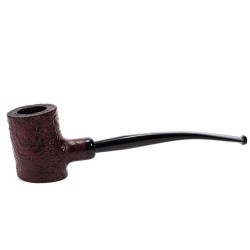
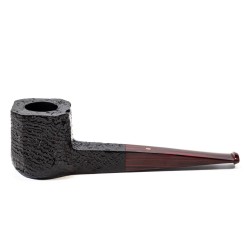
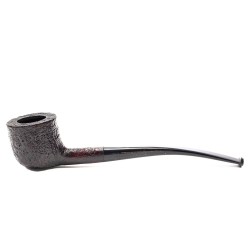
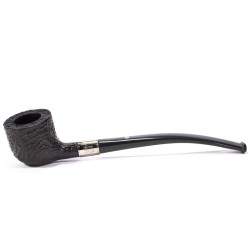
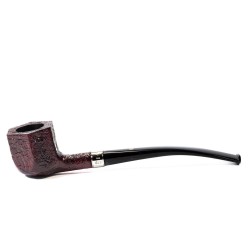
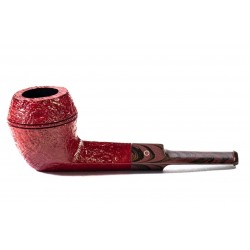
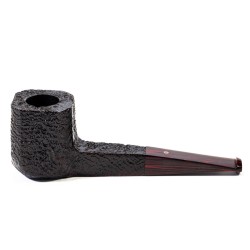
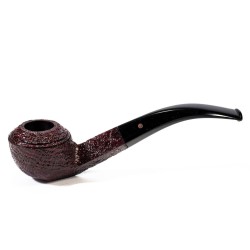
Ashton Pipe

Filtri brand

Price expand_more

€210.00 - €450.00

Model expand_more

Finishing expand_more

Material expand_more

Mouthpiece material expand_more

Filter expand_more

Lenght expand_more

0 mm - 135 mm

Ashton pipes represent one of the finest expressions of the English pipe tradition. A brand born from the experience of Bill Taylor, the historic craftsman trained at Dunhill, who succeeded in bringing craftsmanship, classic pipe shapes, and one of the most appreciated sandblasts among connoisseurs back to the center of English pipe making.

At Pipeonline you can find new Ashton pipes, carefully selected for those seeking an elegant English pipe, rigorous in its proportions and crafted according to the highest standards of the British tradition.


The History of Ashton Pipes


The history of Ashton is inseparably linked to its founder, Bill Taylor, one of the most talented craftsmen in the English pipe tradition.

Bill joined Dunhill at just fifteen years old, beginning a long apprenticeship within the company that at the time represented the highest prestige in the world of pipe making. Over the years, he quickly distinguished himself through his skill, becoming one of the company’s most respected artisans and learning the closely guarded production techniques that had made Dunhill an absolute reference point, especially in stem making and the perfect fitting between stem and bowl.

In the early 1980s, Bill Taylor felt the need to create his own brand with the goal of bringing pipe making back to the highest standards of the English tradition. This led to the birth of Ashton pipes.

Bill’s knowledge of briar processing and pipe production was so deep that he was even granted a British patent for his unique manufacturing method, capable of producing pipes that were 12–14% lighter than equivalent models from other brands.

One of the key principles behind the Ashton philosophy was giving equal importance to every single part of the pipe. From the bowl to the stem, every component was made using top-quality materials and finished with extreme precision.

Bill Taylor was also one of the very few craftsmen privileged enough to personally select the briar used for his production. Twice a year he traveled to Italy to choose the finest briar blocks. For smooth pipes he preferred Calabrian briar, appreciated for its dense yet workable consistency. He often oriented the cut of the briar to achieve the famous cross grain patterns, also known as bird’s-eye grain, highly appreciated by pipe enthusiasts.

For sandblasted pipes, he instead used Tuscan briar, ideal for achieving the deep and irregular sandblasts that made Ashton famous. Even today, many collectors compare Ashton sandblasts to the early Dunhill Shell Briars, considered among the finest sandblasted pipes ever produced.

At the core of Ashton production is also the famous Oil Curing process, a technique perfected by Bill Taylor after years of experimentation. After being cut from the briar blocks, the pipe bowls are heated to allow the wood to expand, then immersed in a blend of three specific oils. They are subsequently placed on heated supports for approximately two weeks, during which the oil gradually sweats out of the briar, removing impurities and unwanted residues. This process contributes to the dry smoking characteristics of Ashton pipes and their distinctive nutty aroma.

Bill Taylor also developed an innovative stem material called Ashtonite, a special blend of rubber and acrylic that combines the soft feel of ebonite with the shine and durability of acrylic.

Following Bill Taylor’s passing in 2009, leadership of the company passed to Jimmy Craig, a craftsman highly respected by Taylor himself for his ability to faithfully preserve the style, techniques, and production philosophy that made Ashton one of the most respected names in contemporary English pipe making.


Dating and Grading of Ashton Pipes


Ashton pipes were introduced to the market in 1983 and, from that year until the early 2000s, featured a serial number stamped after the “Made in England” marking. The numbering began with the number 3, corresponding to 1983, and continued progressively over the years up to number 25 in 2005.

Pipes from the very first production year are now especially sought after by collectors. These early models can be recognized by their simple block-letter stampings, the absence of finish designations, and the “Made in London England” marking.

In modern production, some Ashton pipes instead feature a three-digit code, with the last two digits indicating the year of production.

The classification of Ashton pipes is mainly based on the finish and the type of stem used.

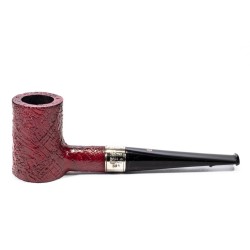
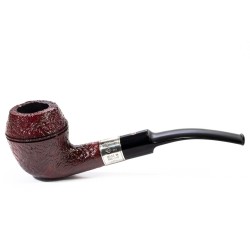
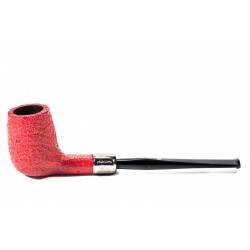
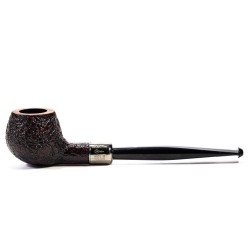
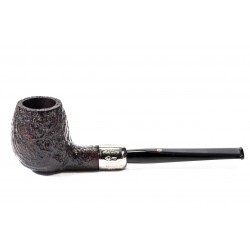
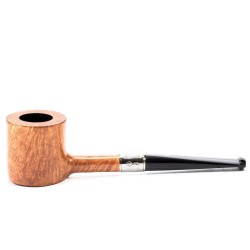
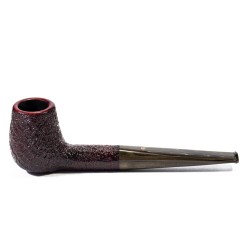
Ashton Pebble Grain refers to the brand’s classic dark sandblasted pipes, among the most iconic finishes in contemporary English pipe making. Ashton Brindle pipes share the same sandblasted finish but stand out thanks to their distinctive cumberland stems.

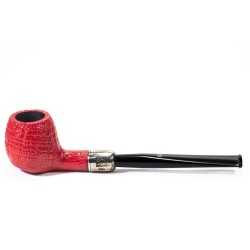
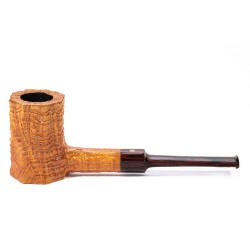
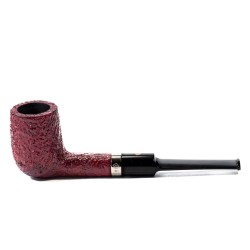
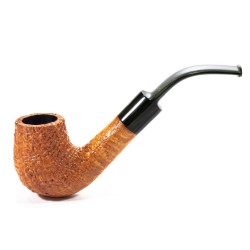
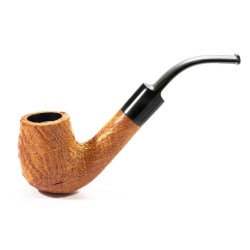
Ashton Old Church pipes are recognized for their lighter natural sandblasted finish, while Ashton Claret models are immediately identifiable by their deep red coloration.

Among the smooth pipes, the Ashton Sovereign series stands out for its light natural finish, designed to highlight the quality and grain of the briar.

Pipe sizes also follow a precise classification system. Ashton pipes are progressively categorized as X, XX, XXX, LX, ELX, and Magnum, designations that identify increasingly larger and more imposing models.


Why Are Ashton Pipes So Appreciated by Connoisseurs?


Ashton pipes are considered among the most appreciated English pipes by connoisseurs for several reasons. First and foremost, they represent one of the most authoritative expressions of contemporary English pipe making, thanks to a production of classic shapes crafted with exceptional precision and faithful to the great British tradition.

One of the aspects most admired by enthusiasts is undoubtedly the Ashton sandblast, regarded by many as unique within the world of English pipes. Its deep, irregular, and highly textured surfaces are often compared to the early Dunhill Shell Briars, which became legendary precisely because of the quality of their sandblasting.

Another detail that makes Ashton pipes immediately recognizable is the distinctive glossy finish of their sandblasted surfaces, a feature highly appreciated by collectors and closely connected to the famous Oil Curing process developed by Bill Taylor.

Great importance is also placed on the quality of the briar. Ashton uses only high-quality Italian briar, carefully selected and extensively aged, an essential element in achieving a dry, balanced, and consistently enjoyable smoking experience.

All of this is combined with extremely rigorous craftsmanship, in which every component of the pipe — from the bowl to the stem — is finished with great precision, following the same production philosophy that made Ashton one of the most respected names among lovers of classic English pipes.


Discover the Selection of Ashton Pipes at Pipeonline


Explore the selection of Ashton pipes available at Pipeonline and find the model that best suits your way of enjoying the pipe, from the iconic Pebble Grain to the elegant Sovereign, including the natural Old Church finishes and the distinctive Brindle models with cumberland stems.

Ashton is considered one of the most authoritative expressions of contemporary English pipe making: a brand founded by Bill Taylor, the historic craftsman trained at Dunhill, who successfully carried forward the tradition of the classic British pipe with exceptionally high production standards. From the famous Oil Curing process to the deep sandblasts that made the brand iconic, every detail of an Ashton pipe reflects a production philosophy built around precision, high-quality briar, and perfection of shape.

Choosing an Ashton means experiencing one of the English pipe brands most appreciated by connoisseurs. Whether you are looking for the deep texture of a Pebble Grain, the refined elegance of a smooth Sovereign, or the natural charm of an Old Church finish, here you can discover Ashton pipes that perfectly embody the elegance and rigor of the great English pipe tradition.


Frequently Asked Questions (FAQ)


What are the opinions on Ashton pipes?


Ashton pipes are considered among the most appreciated English pipes by connoisseurs thanks to their exceptional craftsmanship and the precision with which their classic shapes are executed.

These are completely handmade pipes, deeply connected to the British pipe tradition and especially admired by enthusiasts of the English school. Their deep sandblasts, high-quality briar, and meticulous attention to detail have made Ashton one of the most respected brands in contemporary pipe making.


Where can I buy Ashton pipes in Italy?


Ashton pipes can be purchased through specialized tobacconists and authorized retailers such as Pipeonline.

At Pipeonline you can find a carefully selected range of new Ashton pipes with fast shipping throughout Italy, including models chosen to satisfy both lovers of classic English shapes and the most demanding collectors.


What are the main characteristics of Ashton pipes?


Ashton pipes stand out for three fundamental characteristics that made the brand one of the leading names in English pipe making:

  • Classic English shapes: Ashton pipes rigorously follow the traditional standards of the British school, offering classic shapes crafted with exceptional balance and technical precision.
  • Craftsmanship: every Ashton pipe is completely handmade, with extreme attention dedicated to the bowl, sandblast finish, and stem work, features that make the brand especially appreciated by connoisseurs.
  • International prestige: Ashton is considered a premium high-end pipe brand, recognized worldwide for the quality of its production and its strong connection to the great English pipe tradition.


How can I recognize an original Ashton pipe from a counterfeit?


To recognize an original Ashton pipe, it is important to carefully examine the stampings located on the underside of the pipe. Over the years, Ashton markings have changed, but modern pipes still feature specific details that allow collectors and enthusiasts to verify their authenticity.

Contemporary Ashton pipes generally display the size designation inside a circle, followed by the Ashton logo, the series name, and the “Made in England” marking. The quality of the craftsmanship, the precision of the stampings, and the overall attention to finishing details are also essential elements in identifying a genuine Ashton pipe.


What are the best Ashton pipe models for beginners?


For those approaching Ashton pipes for the first time, straight shapes are often the best choice. Models such as Billiard, Apple, or Prince tend to produce less condensation, making them easier to manage for smokers who are still developing their smoking technique.

Among the most recommended series are the Ashton Pebble Grain and Ashton Brindle lines, the brand’s iconic sandblasted finishes, highly appreciated for their balance between craftsmanship, smoking comfort, and overall value.


How should an Ashton pipe be cleaned and maintained?


To keep an Ashton pipe in optimal condition, regular cleaning after each smoke is highly recommended.

Using soft tapered pipe cleaners helps absorb condensation and remove residues inside the shank and stem. For more stubborn buildup or long-term residue accumulation, abrasive pipe cleaners can also be used, as they provide a more intensive cleaning action.

Consistent maintenance helps preserve both the smoking quality and the longevity of the pipe over time.


What are the advantages of Ashton pipes compared to other brands?


Ashton pipes stand out for their exceptionally high level of craftsmanship, especially in the execution of classic English shapes. The brand follows the traditional standards of the British pipe school with remarkable precision, producing pipes that are balanced, elegant, and meticulously finished in every detail.

This is combined with the international prestige built over decades by Bill Taylor, founder of the brand and former Dunhill craftsman, who succeeded in creating a credible alternative to the greatest names in English pipe making.

Today, many connoisseurs consider Ashton one of the absolute benchmarks of contemporary English pipes thanks to its high-quality briar, legendary deep sandblasts, and exceptional level of handmade craftsmanship.


Ashton Pipes: Video