

Meerschaum Pipe
Sort by:
Filtri brand
Meerschaum Pipe - Bent Bulldog
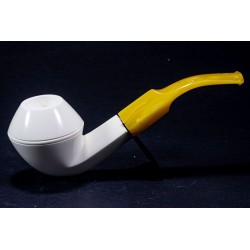
Meerschaum Pipe - Bent Apple
ME 2601
- New
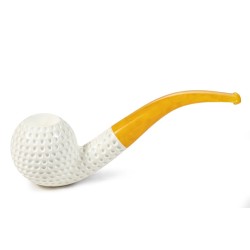
Meerschaum Pipe - Bent Bulldog
ME 2351 - B 216
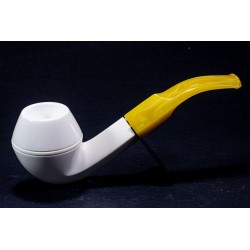
Meerschaum Pipe - Liverpool
ME 2334-1 - B 216
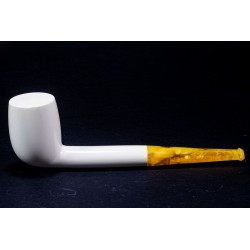
Meerschaum Pipe - Bent Bulldog
ME 2325 - B 216
- Not available
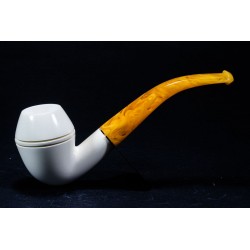
Meerschaum Pipe - Bent Bulldog
ME 2323 - B 216
- Not available
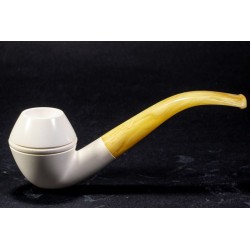
Meerschaum Pipe - Quarter Bent Billiard
ME 2337 - B 204
- Not available
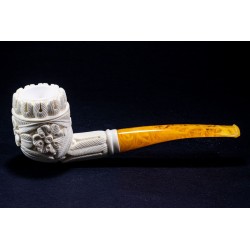
Meerschaum Pipe - Bent Apple
ME 2602
- New
Meerschaum pipes represent one of the most fascinating alternatives to briar. Made from sepiolite, a lightweight and highly porous mineral, they offer a distinct smoking experience, appreciated for its coolness and aromatic neutrality.
What Are Meerschaum Pipes?
Meerschaum, also known as sepiolite, is a lightweight and highly porous natural mineral that has been used for centuries in pipe making. The term meerschaum is of German origin and literally means “sea foam,” referring to the material’s light color and delicate appearance.
Thanks to its exceptional workability, sepiolite allows artisans to create pipes ranging from classic shapes to finely carved models, sometimes depicting faces or intricate subjects. Its porous structure absorbs moisture during smoking, delivering a cooler and drier experience compared to briar while preserving the natural flavor profile of the tobacco without altering it.
Today, high-quality sepiolite used for pipe production comes primarily from Turkey, where the most significant deposits are located. Due to this geographical concentration, Meerschaum pipes have become increasingly sought after over time.
The History of Meerschaum Pipes
The origins of Meerschaum pipes date back to the 18th century, more precisely to 1723. According to tradition, the Hungarian Baron Andrássy returned from a trip to Turkey with two pieces of sepiolite and entrusted them to his shoemaker, Karl Kovacs, asking him to carve sculptures. Kovacs recognized the potential of the material and instead shaped it into a pipe, understanding that its porosity made it particularly suitable for smoking.
The idea quickly gained popularity. In a short time, Kovacs devoted himself almost exclusively to the production of sepiolite pipes, which were highly appreciated for their ability to absorb moisture and tobacco residues, delivering a cooler and drier smoke.
Between 1750 and 1850, Meerschaum pipes gradually replaced clay pipes, especially among wealthier smokers, becoming true luxury items. Vienna emerged as one of the main production centers, helping to spread and elevate the prestige of Meerschaum pipes throughout Europe.
With the introduction of briar in pipe manufacturing, demand for Meerschaum models declined slightly but never disappeared. The distinctive smoking qualities of the material remained highly valued. To reduce costs, some artisans began combining materials, creating pipes with bowls and shanks made of sepiolite and other parts in briar. This combination allowed smokers to benefit from the absorbent and neutral properties of Meerschaum while also taking advantage of the heat resistance and durability of briar.
The popularity of Meerschaum pipes, both as smoking instruments and collectible objects, continued until the late 19th century. Among their notable admirers was Theodore Roosevelt, who owned several Meerschaum pipes carved in his own likeness.
Difference Between Meerschaum and Briar Pipes
Meerschaum pipes differ from briar pipes in several ways, starting with the smoking experience itself.
Thanks to its naturally porous structure, Meerschaum absorbs part of the moisture produced during tobacco combustion and does not interfere with the tobacco’s flavor profile. This allows for a more direct and neutral taste, without the subtle notes that briar may develop and impart over time. As a result, the smoke is generally cooler and drier, offering a distinct sensation compared to wood.
Another significant difference lies in the material’s workability. Sepiolite is softer and easier to shape than briar, enabling artisans to create highly intricate and detailed designs. This is why Meerschaum pipes are often true sculptural works, depicting human faces, mythological figures, animals, or complex scenes that would be far more difficult to achieve in wood.
Finally, one of the most fascinating aspects of Meerschaum is the so-called coloring process, the gradual darkening of the pipe’s exterior surface. With use, the pipe transitions from its original white tone to warm yellow and amber shades. This transformation occurs as the material absorbs the natural oils of the tobacco, making each pipe unique in its aging process.
It is precisely this aesthetic evolution, combined with its distinctive smoking qualities, that encourages many smokers to try a Meerschaum pipe at least once in their lifetime.
Why Choose a Meerschaum Pipe
A Meerschaum pipe may not be the most conventional choice, but it is one of those experiences every pipe smoker should try at least once. It offers a smoking experience that differs significantly from briar and other traditional materials, allowing you to rediscover the same tobacco from a new perspective, with cleaner and more direct flavor nuances.
Meerschaum is a hydrated magnesium silicate, a lightweight and naturally porous mineral selected specifically for its performance during smoking. Its structure absorbs part of the moisture generated by combustion, resulting in a cooler, drier smoke with a high degree of aromatic neutrality.
The ability to experience tobacco without interference from the material itself is one of the main reasons many smokers choose to include at least one Meerschaum pipe in their collection. In addition, its ease of carving allows for more creative and unconventional designs, making each pipe a distinctive object.
At Pipeonline, you will find a wide selection of Meerschaum pipes, from classic shapes to more elaborate designs, giving you the opportunity to experience firsthand everything this unique material has to offer.
Frequently Asked Questions (FAQ)
What Is the Coloring Process of a Meerschaum Pipe?
The coloring process refers to the gradual darkening of a Meerschaum pipe that occurs with regular use. Over time, the pipe’s original white surface begins to turn yellow, gradually developing warmer amber and even reddish tones.
This transformation is linked to the material’s ability to absorb the natural oils and residues produced during smoking. For this reason, smoking technique can influence the final aesthetic result. Slow, steady puffs help promote a more even and harmonious coloring process.
When the darkening develops uniformly, color typically appears first in the cooler areas of the pipe, such as the base of the bowl and the shank, creating a natural contrast with the parts that remain lighter. It is precisely this gradual evolution that makes every Meerschaum pipe unique over time.
Where Is Meerschaum Found?
Meerschaum, or sepiolite used for pipe production, is mined primarily in Turkey, where the most significant and high-quality deposits are located, particularly in the Eskişehir region.
Because of this geographical concentration, the availability of the material is limited and closely tied to the supply of the finest blocks.
For over thirty years, Meerschaum pipes distributed in Italy have been imported by the company Lubinski and crafted by artisan Hüseyin Şekercioğlu, who works in one of the most renowned extraction areas in Turkey. These are true handcrafted pieces, carved from carefully selected blocks of sepiolite and shaped into both classic designs and more elaborate models.
How Do You Clean a Meerschaum Pipe?
Cleaning a Meerschaum pipe follows many of the same basic principles as cleaning a briar pipe, but it requires a bit more care, as Meerschaum is a more delicate material.
After each smoke, it is advisable to use a soft pipe cleaner to clean the stem and shank, removing any residual moisture. Always allow the pipe to cool completely before taking it apart or performing any cleaning.
It is also important to avoid sudden temperature changes. Never place a warm pipe on a cold surface, as thermal shock may increase the risk of cracks in the bowl.
With simple but consistent maintenance, a Meerschaum pipe can last for many years, gradually maturing both in performance and appearance.
What Is Sepiolite?
Sepiolite, also known as hydrated magnesium silicate, is a natural mineral found primarily in the Eskişehir region of Turkey, where it is extracted in irregular nodular masses from alluvial deposits.
In its raw state, it is a relatively soft material that hardens once dried or exposed to heat. Its structure is highly porous, allowing it to absorb moisture and oils without deforming.
It is precisely this absorbent quality that makes sepiolite ideal for pipe making: during smoking, it helps retain part of the moisture produced by combustion, resulting in a cooler and drier experience.
How Much Do Meerschaum Pipes Cost?
Meerschaum pipes generally have a higher price compared to those made from other materials, partly due to the limited availability of sepiolite, which is primarily sourced in Turkey.
The combination of material rarity and handcrafted production directly affects the final cost. On average, a Meerschaum pipe is priced around €200, with variations depending on the complexity of the shape and the level of craftsmanship involved.
Meerschaum Pipes: Video